
How to Identify Traffic Counting Devices: 6 Common Misconceptions Between Dedicated Sensors and General Cameras
The claim on the quote that "existing cameras can be used directly" is half-true and half-risky: while interfaces may connect, it doesn't guarantee usable foot traffic data. This article breaks down six common misconceptions to clarify the differences between dedicated people-counting devices and general-purpose cameras, and provides a practical six-point verification checklist.
1Introduction: The quote on the invoice—half true, half dangerous
When purchasing a客流 analysis platform, the most common line item in quotes is "Existing cameras can be used directly." This statement is half true and half risky. It's true that data interfaces can be integrated; the risk lies in conflating "able to capture video" with "able to generate usable客流 data." The gap between them isn't about pixel resolution—it's whether the devices were specifically designed for客流 counting.
2Misconception 1: Clear video means accurate foot traffic data.
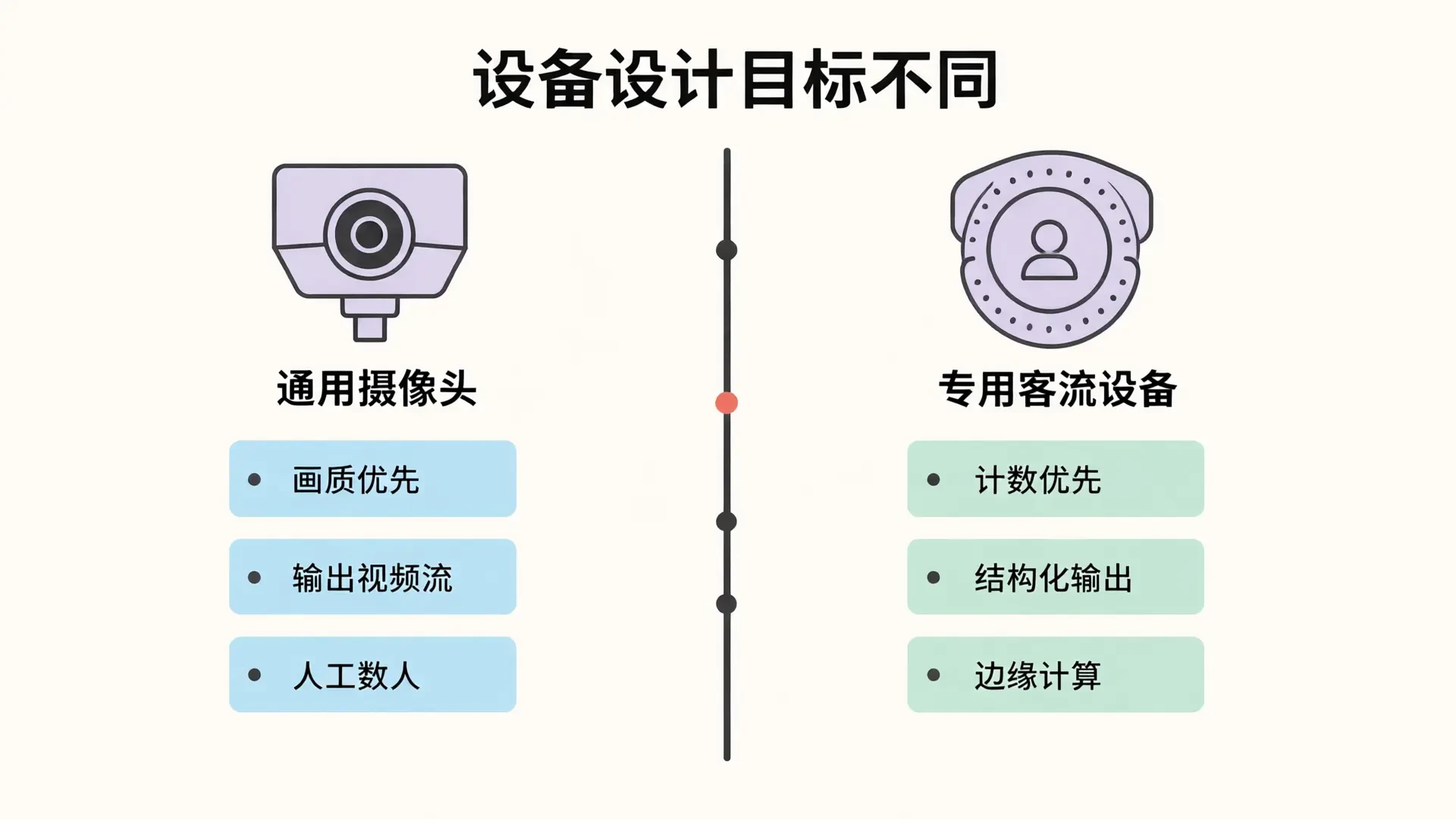
General-purpose cameras are optimized for clear facial and license plate recognition, enhancing image quality, wide dynamic range, and storage duration. Dedicated people-counting devices are designed specifically to "count heads," optimizing object detection, cross-frame tracking, and deduplication. In-store errors primarily stem from occlusions, simultaneous entry/exit, and lingering; increasing resolution alone cannot resolve these issues. Dedicated devices perform trajectory calculations at the edge and output structured counts with timestamps. When purchasing, first ask: Does the device output a headcount directly, or must your platform count people from the video feed?
3Misconception 2: Once the API is connected, the data is ready to use.
Connectivity is just the first step. Usable data must also meet three criteria: it can be exported by region, direction, and time slot; timestamps align with operating hours; and offline caching supports resubmission after network recovery. Missing any one of these results in incomplete data visible to the platform. Whether a platform offers compatibility testing speaks volumes more than how detailed its API documentation is. We support direct integration with major brands including Hikvision, Dahua, Uniview, and Huawei. Before deployment, we provide free compatibility checks to verify that specific models and firmware versions can reliably deliver data.
4Misconception 3: Confusing the nominal accuracy with in-store measured values
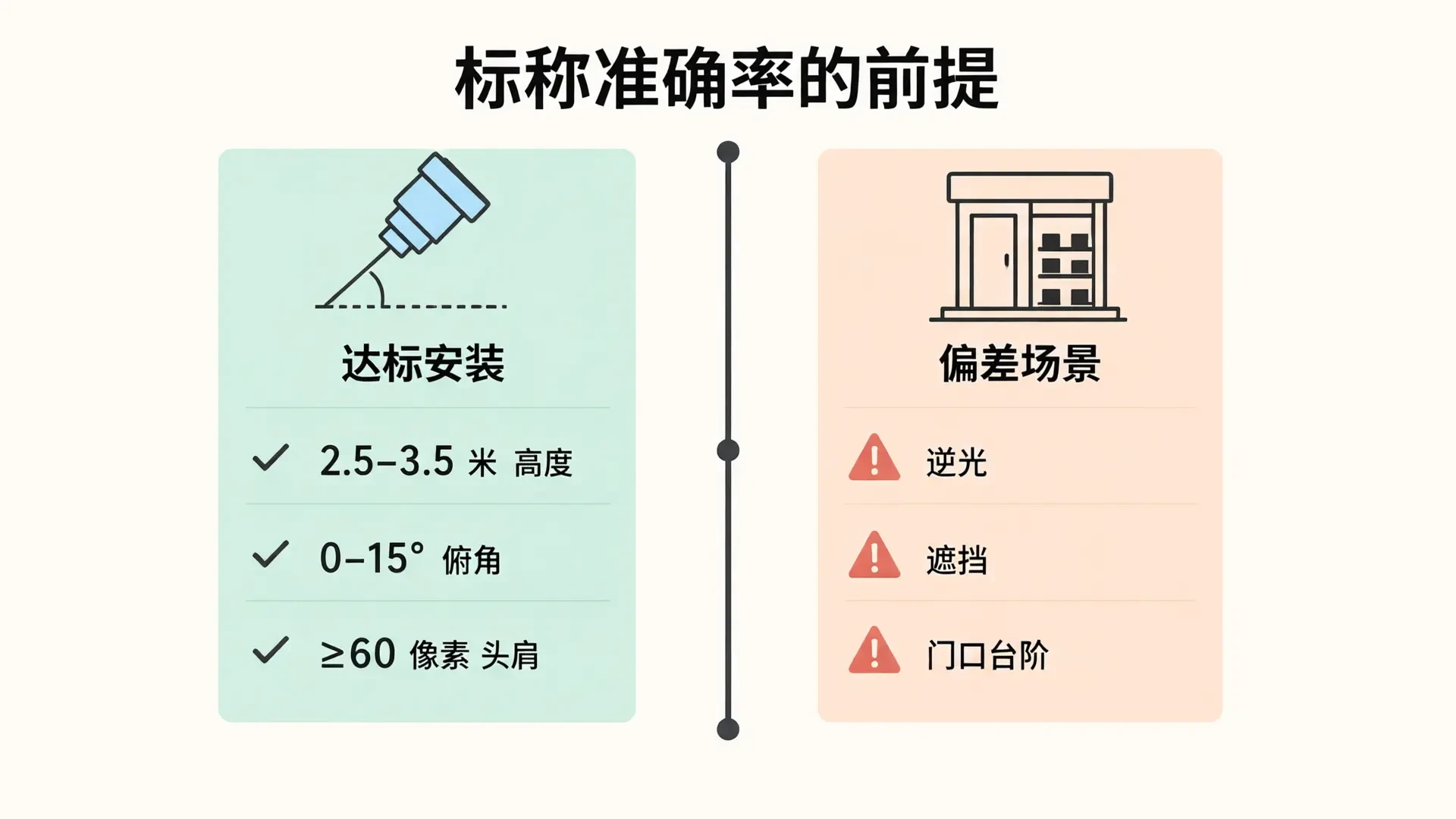
The "above 95%" claim typically assumes specific conditions: installation height of 2.5 to 3.5 meters, downward tilt angle of 0 to 15 degrees, and a head-shoulder pixel count of at least 60. Outside this range, factors like backlighting, shelf occlusion, and store entrance steps can significantly increase error rates. Infrared beam sensors are only suitable for simple entry/exit counting and cannot support dwell time analysis or traffic flow insights. To ensure accuracy, require suppliers to clearly specify installation requirements and acceptance criteria, then validate performance with at least one week of parallel testing in actual stores rather than relying solely on lab reports.
5Myth 4: Upgrading the platform requires new hardware.
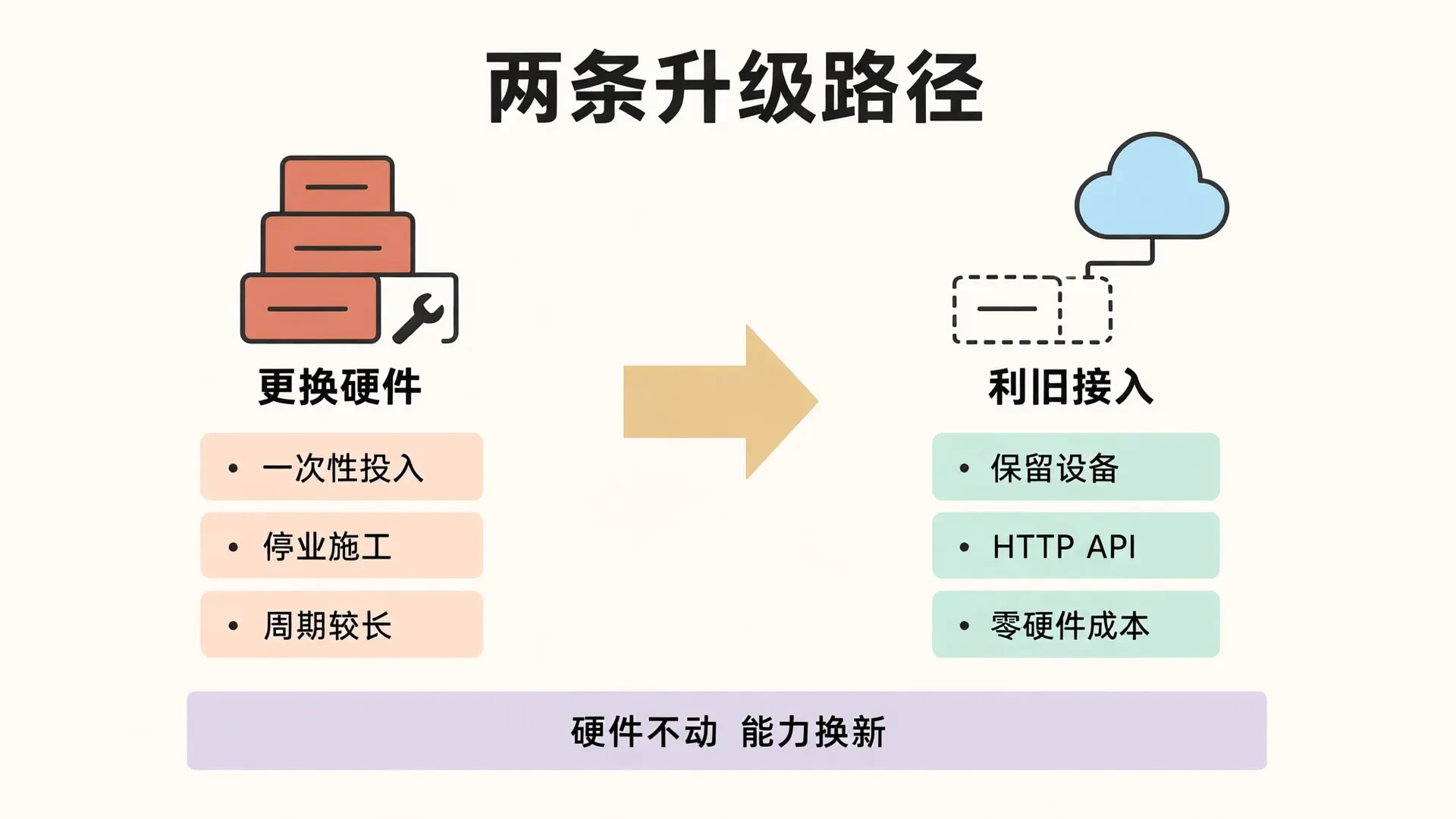
The reuse potential of existing devices often exceeds most buyers' expectations. Devices equipped with built-in footfall counting and open APIs can feed data into new analytics platforms without hardware changes—upgrading only the analysis capability. A recent park project demonstrated this: multi-brand devices connected to a public cloud platform via HTTP API, achieving zero hardware replacement costs. When selecting equipment, treat "reuse compatibility" as a distinct evaluation criterion; it directly impacts first-year investment.
6Misconception 5: Focusing only on features, not data compliance
Customer traffic data involves personal information protection. Compliant practice is to output only count results and anonymized feature vectors at the device level, without retaining face images. The platform enforces role-based access control by organizational hierarchy; data belongs to the customer and can be exported. During procurement, verify three items: whether raw video is retained, retention duration, and who has access. We hold a registered software copyright and have passed the security assessment by the Public Security Bureau's Cyber Security Department. These documents are readily available for bidding and internal compliance reviews.
7Myth 6: Focusing only on unit price, not the total three-year cost
Hardware is a one-time investment, while the platform is billed annually per organization. To compare them in the same table: at 1200 per year (per organization), the cost difference between three years of platform fees and a full hardware refresh for a chain with 200 stores often determines whether a project gets approved. The trial period is also part of the cost; our 14-day free trial requires no payment method and is enough time to run a real-world comparison.
8Actionable Verification Checklist
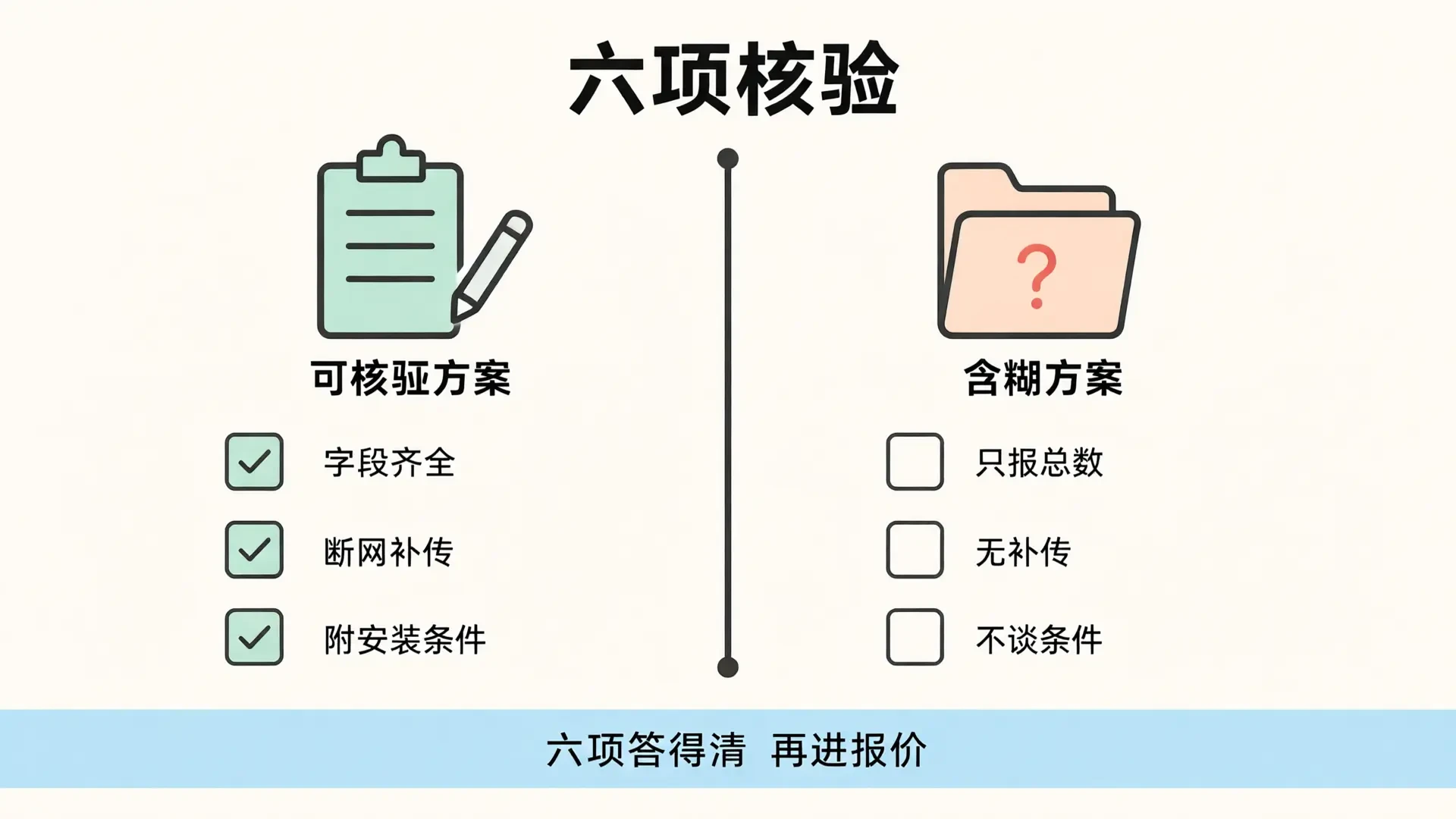
Determine whether a solution belongs to the dedicated equipment system or generic modular assembly by sequentially verifying six criteria: Does the device have independent passenger counting capabilities and open APIs? Do output fields include person count, direction, timestamp, and zone? Is the stated accuracy accompanied by installation conditions? Does offline mode support data retransmission? Does the platform offer compatibility testing? Is raw image data retained? Only solutions that provide clear answers to all six criteria are eligible for the quotation stage.
Frequently Asked Questions
Interface connectivity only confirms that video or data streams are accessible. The ability to count foot traffic depends on whether the device itself supports counting. Cameras without dedicated counting capabilities require the platform to infer people counts from video, leading to significant errors in scenarios involving occlusion, side-by-side movement, or loitering.
Read more
- Hardware Compatibility and Device Connectivity
- Multi-device coverage capability
- How to Choose a Foot Traffic Counting System: Start with These 5 Questions
- Which protocol is used for cross-brand access of traffic equipment? Unified HTTP API integration.
- Installation Height and Angle Guidelines for Footfall Cameras: Indoor, Entrances, and High-Ceiling Scenarios
- Implementation Path for Migrating Existing Hikvision and Dahua Devices to the Passenger Flow Public Cloud Platform
- Traffic and Vehicle Flow Project Case Library
- Request Free Trial
Want to generate value from your existing equipment right now?
14-day free trial, no card required.
Continue reading
How to Choose the Right Plan for Our Foot Traffic Platform: A Clear Guide to Device Quotas and Data Retention
Read moreHow to bundle value-added modules? Overload warning, large-screen visualization, and remote store inspection.
Read moreHow to Choose a Foot Traffic Counting System: Start with These 5 Questions
Read moreUnlock business value from your existing devices.
Fill in your information. A technical consultant will contact you within 1 business days and provide a free device compatibility check.
- 14-day free trial, no credit card required
- Auto-renewal off, 7-day money-back guarantee
- Free Device Compatibility Check