
Myth Busted: Anonymized feature vectors are not facial images; standard cameras cannot capture them.
Anonymized feature vectors are often mistaken for facial features, and standard surveillance cameras are frequently assumed to be plug-and-play. This article clarifies these two misconceptions: Feature vectors extract only appearance data such as head-and-shoulder silhouettes and body proportions, intended solely for short-term deduplication and counting. Standard cameras do not output structured foot traffic data; compatible devices must be specialized hardware with built-in analytics capabilities, requiring model-specific verification.
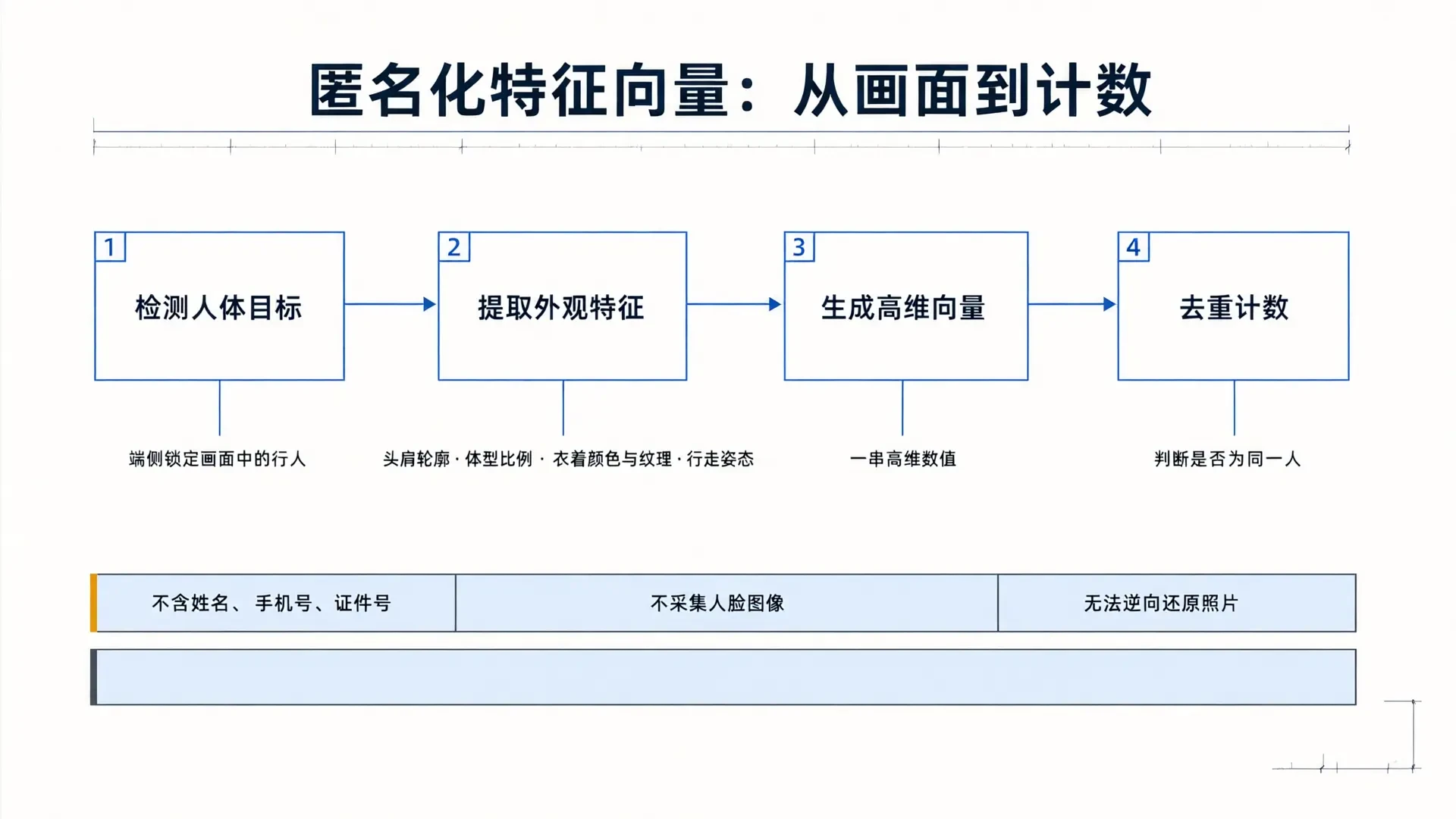
1Anonymized feature vectors are not aliases for facial features.
When selecting a foot traffic analytics platform, two questions come up most often: What exactly are anonymized feature vectors? And why can't standard surveillance cameras be integrated? Each of these questions stems from a widely circulated misconception worth addressing individually.
When edge devices lock onto a human target in the video frame, they extract appearance features such as head-and-shoulder silhouette, body proportions, clothing color and texture, and walking gait. These features are encoded into a high-dimensional numerical vector known as an anonymized feature vector. This vector does not contain personal identifiers like names, phone numbers, or ID numbers; it is neither a face image nor a facial feature template, and cannot be reverse-engineered to reconstruct a photograph. Its purpose is to determine whether the same person appears across consecutive frames or different camera views, enabling deduplication counting and dwell time analysis.
The difference between facial recognition and this approach lies in their purpose. Facial recognition compares a face against an identity database to verify identity, whereas the latter only maintains short-term continuity of personnel without needing to identify who they are. Common engineering practices for such solutions include performing calculations locally on the device, reporting only foot traffic counts, and deleting feature vectors immediately after use.
Anonymization does not mean you can relax management. Encryption for transmission and storage, tiered access controls, data ownership agreements, and deletion mechanisms must still be explicitly included in procurement contracts. Vendors vary widely in their feature extraction scope and retention policies; during selection, require them to provide written documentation detailing which features are extracted, where processing occurs, and how long data is retained.
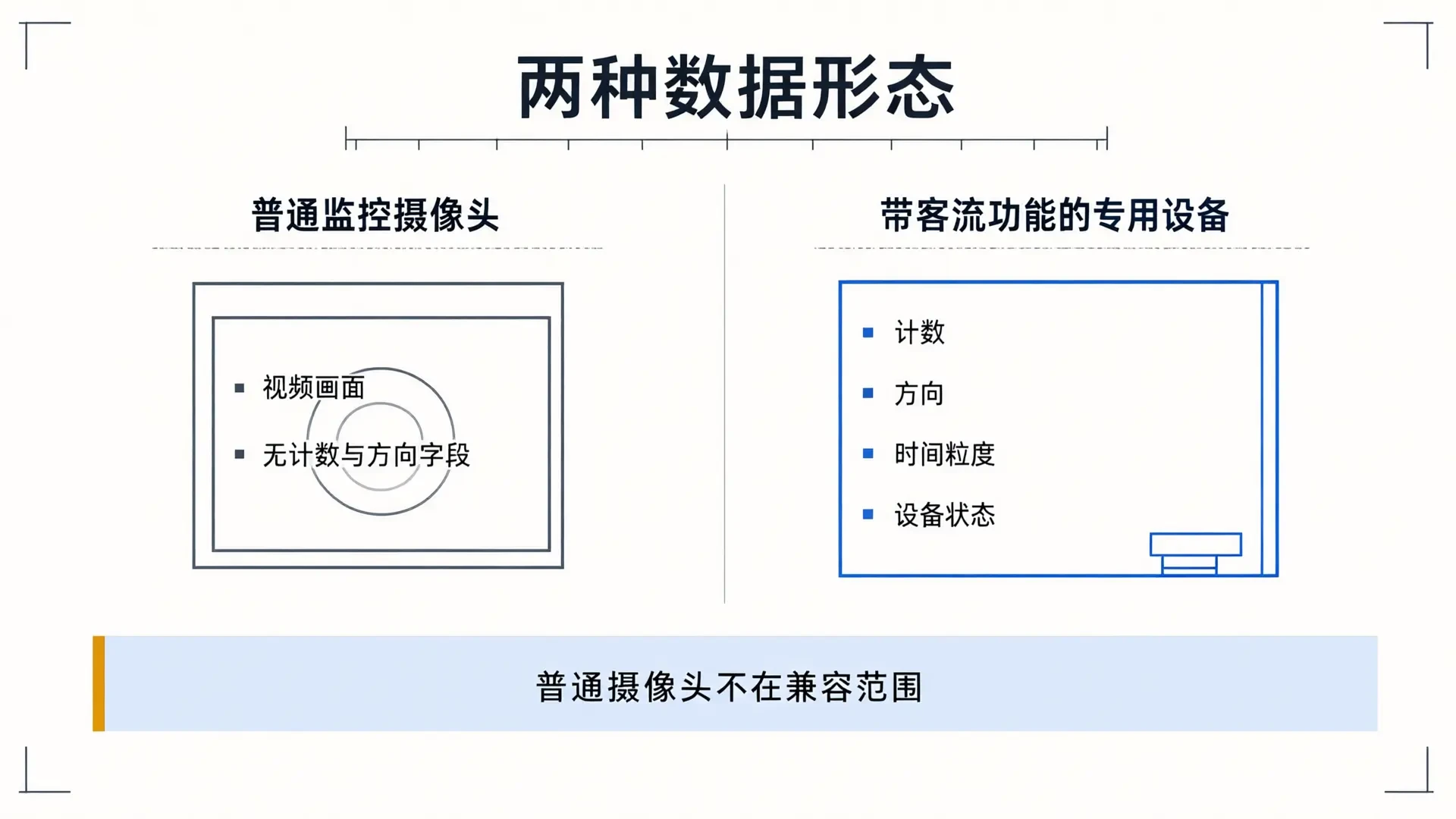
2Standard cameras are not supported due to data format differences.
Standard surveillance cameras output raw video footage. While people may appear in the frames, these systems do not provide structured analytics such as "37 visitors entered, 29 exited, and an average dwell time of 12 minutes." In contrast, our客流 analysis platform ingests pre-processed visitor data from devices via HTTP API. It retrieves fields including counts, direction, time granularity, and device status—without receiving video streams or performing secondary image recognition in the cloud.
Standard cameras are excluded from compatibility—not due to interface limitations, but because they do not generate foot traffic data. Forcing standard cameras into the system requires backend video reprocessing, shifting both accuracy and compliance risks onto the user. The industry claim that "any camera can perform foot traffic analysis" often omits this critical cost.
The platform is compatible with dedicated devices that include people-counting capabilities. When purchasing, verify two key points: whether the device manual specifies people-counting functionality and whether the vendor provides interface documentation for that model.
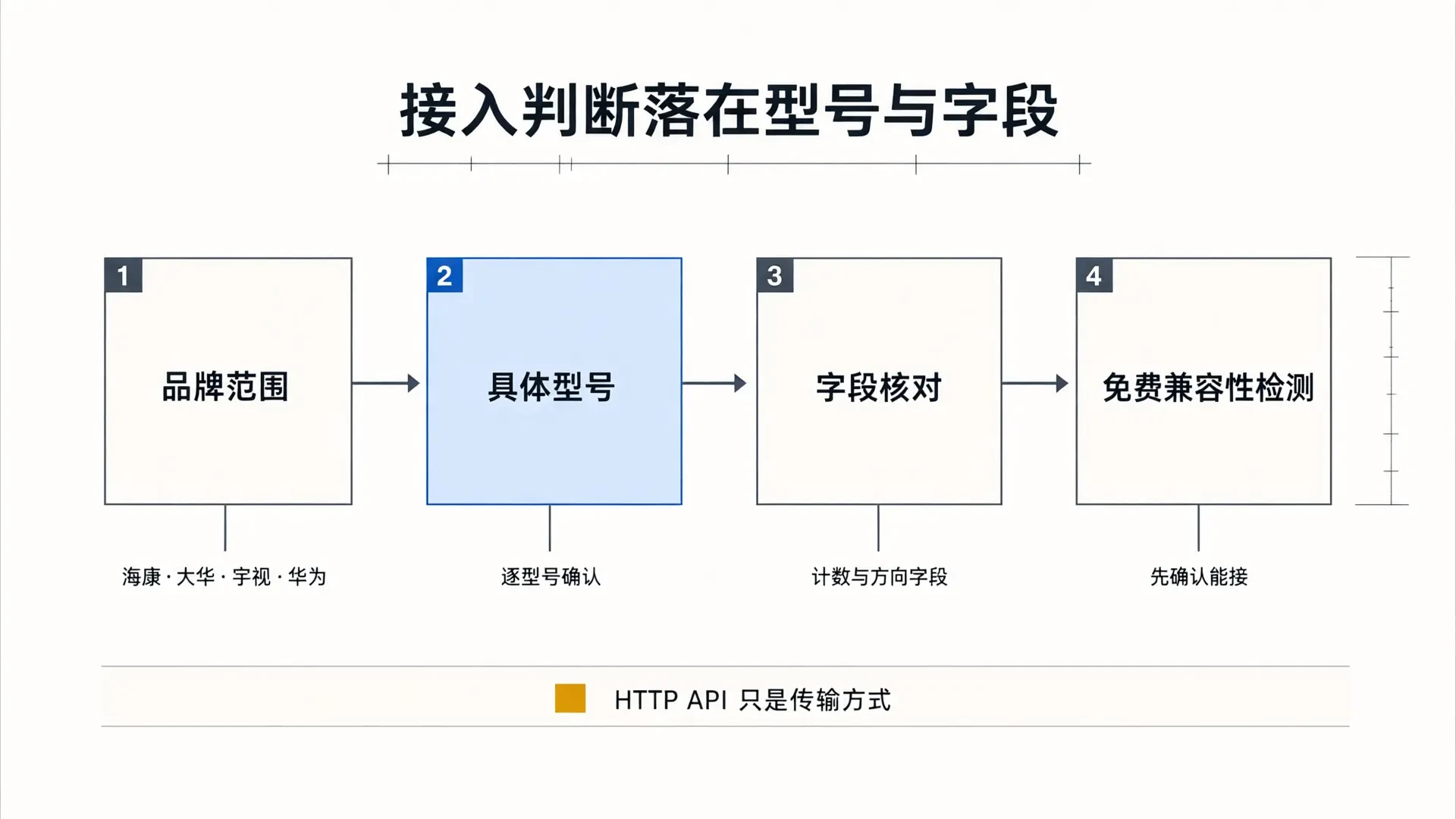
3Supporting an HTTP API doesn't mean all connected devices can integrate.
HTTP API is a transmission protocol that defines how data is sent, not whether it exists. Whether integration succeeds depends on whether the device interface can reliably output count and direction fields, and whether the field definitions, time granularity, and authentication methods match the platform's requirements.
The platform supports major客流 devices from brands like Hikvision, Dahua, Uniview, and Huawei. Compatibility is verified by specific model prior to integration; we do not make blanket commitments based on brand names alone. Data fields can vary significantly across product lines within the same brand, so model-by-model confirmation is essential. This is why we offer free device compatibility testing: we verify connectivity first, then proceed with deployment.
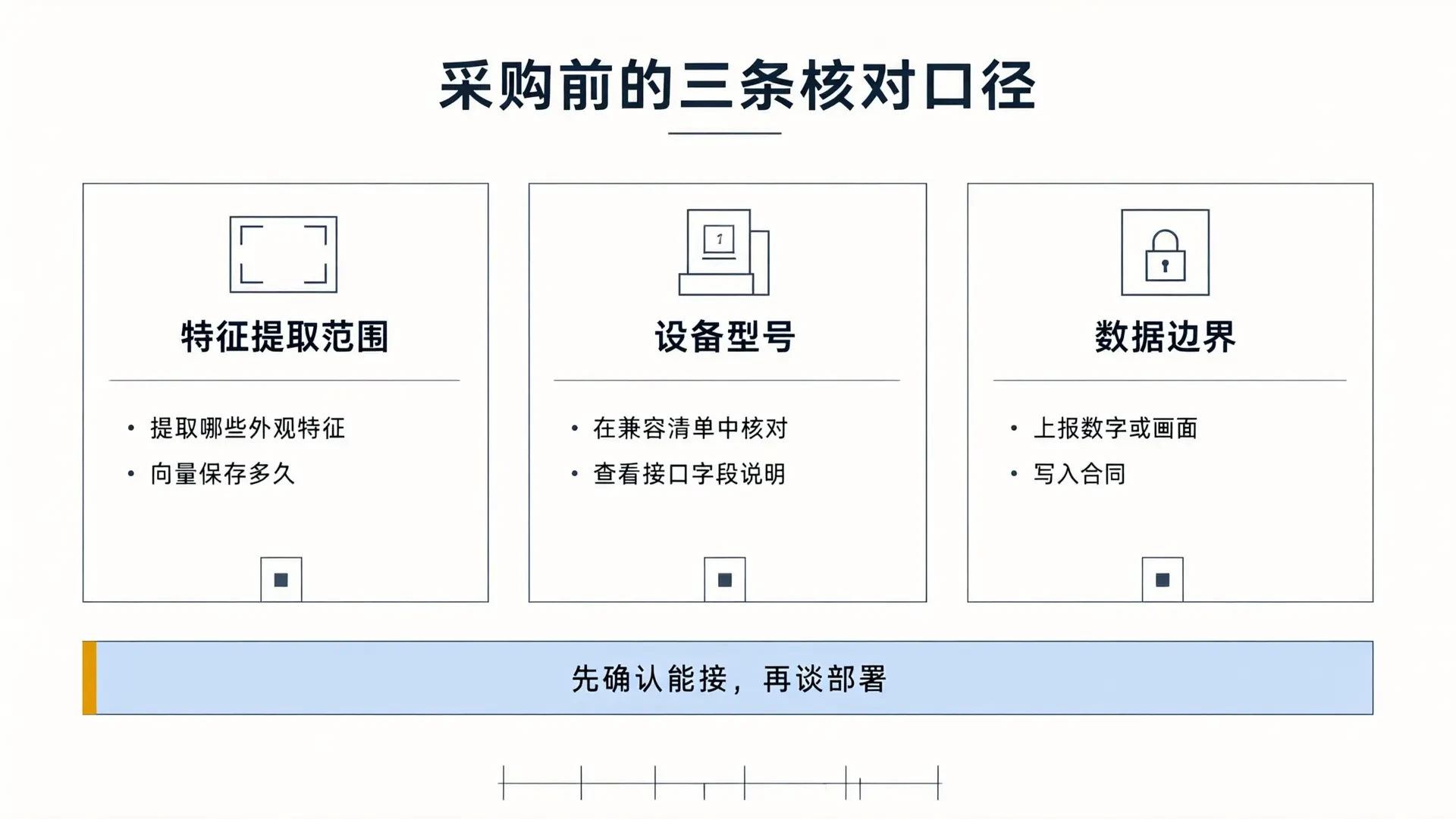
4Three executable verification criteria
First, clarify the scope of feature extraction. Ask whether they can specify which appearance features were extracted, if processing occurs on-device, and how long vectors are retained. Any ambiguity here represents a risk.
Second, verify the specific device model rather than the device category. Request that the other party specify the exact model in the compatibility list and provide the interface field documentation.
Third, codify data boundaries in the contract. Specify whether you're reporting numbers or visual data, who owns the data, and how deletion is executed—these are far more reliable than verbal promises.
The value of traffic analytics relies on continuous, accurate counting. Anonymized feature vectors resolve the tension between "needing continuity for statistics" and "not needing identity." Standard cameras are excluded due to inherent limitations in data format. Distinguishing these two factors prevents being misled by claims like "compatible with everything" during selection.
Frequently Asked Questions
No, by design. Feature vectors store numerical encodings of appearance data such as head-and-shoulder contours, body proportions, clothing color and texture, and gait patterns. They do not contain facial images or face feature templates and cannot be reverse-engineered into photos. During procurement, require vendors to provide written documentation detailing the extraction scope, processing location, and retention period, and verify their claims through deletion mechanisms.
Read more
- Hardware Compatibility and Device Connectivity
- ReID Foot Traffic Analytics: Why It Outperforms Infrared Beam Counting
- How to Identify Traffic Counting Devices: 6 Common Misconceptions Between Dedicated Sensors and General Cameras
- Which protocol is used for cross-brand access of traffic equipment? Unified HTTP API integration.
- Open API Documentation
- Request Free Trial
Want to generate value from your existing equipment right now?
14-day free trial, no card required.
Continue reading
How to Choose Between Infrared Beam, Video Analytics, and AI Vision for Foot Traffic Counting
Read moreTraffic Flow Survey Camera Site Survey Key Points: Installation Angle, Height, and License Plate Pixel Resolution
Read moreReID Foot Traffic Analytics: Why It Outperforms Infrared Beam Counting
Read moreUnlock business value from your existing devices.
Fill in your information. A technical consultant will contact you within 1 business days and provide a free device compatibility check.
- 14-day free trial, no credit card required
- Auto-renewal off, 7-day money-back guarantee
- Free Device Compatibility Check