
Project Background
Shanghai Tuochi Municipal Traffic Engineering Co., Ltd. has established temporary vehicle measurement points in Changning District to collect traffic flow data on urban roads. These are temporary sites: they operate for days or weeks, are dismantled after completion, and may be relocated based on project requirements.
On-site Constraints
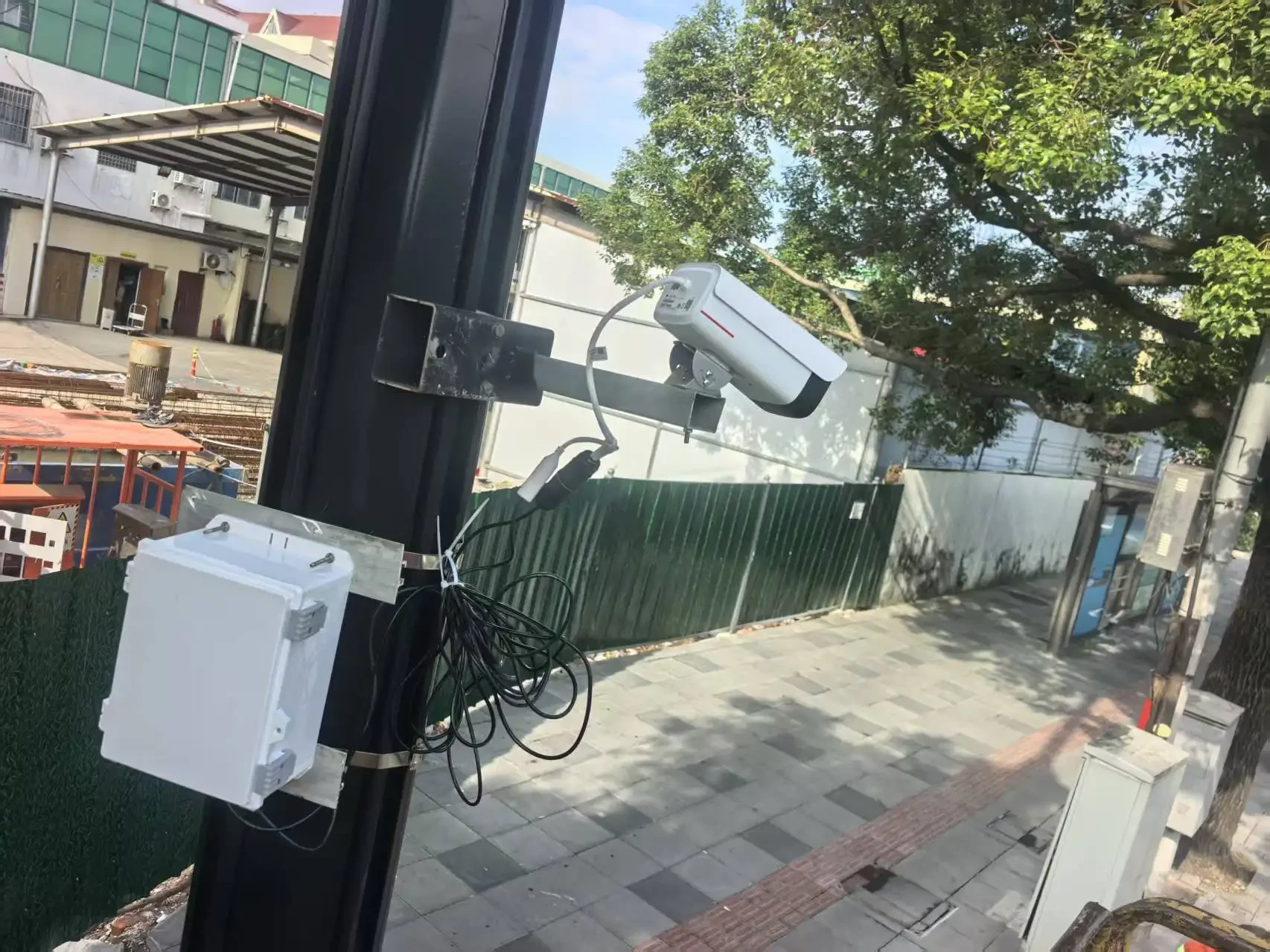
Temporary locations are unsuitable for installing new poles or breaking road surfaces. The only available mounting points are existing traffic signal or surveillance poles, so equipment must be secured with clamp brackets, and power and cabling should be routed along the pole. The camera requires a top-down view of multiple lanes to reliably distinguish vehicles and count them.
Deployment Plan
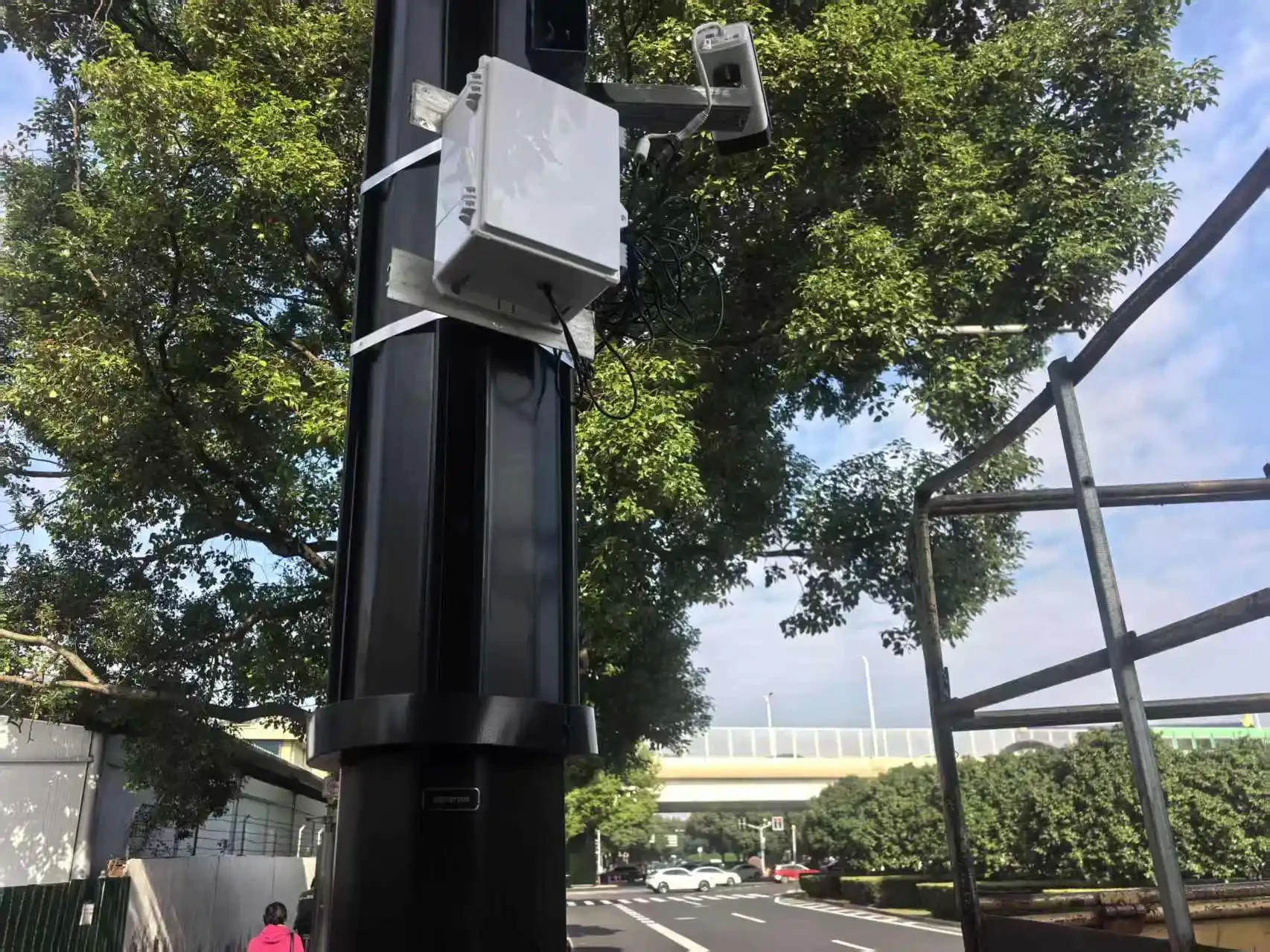
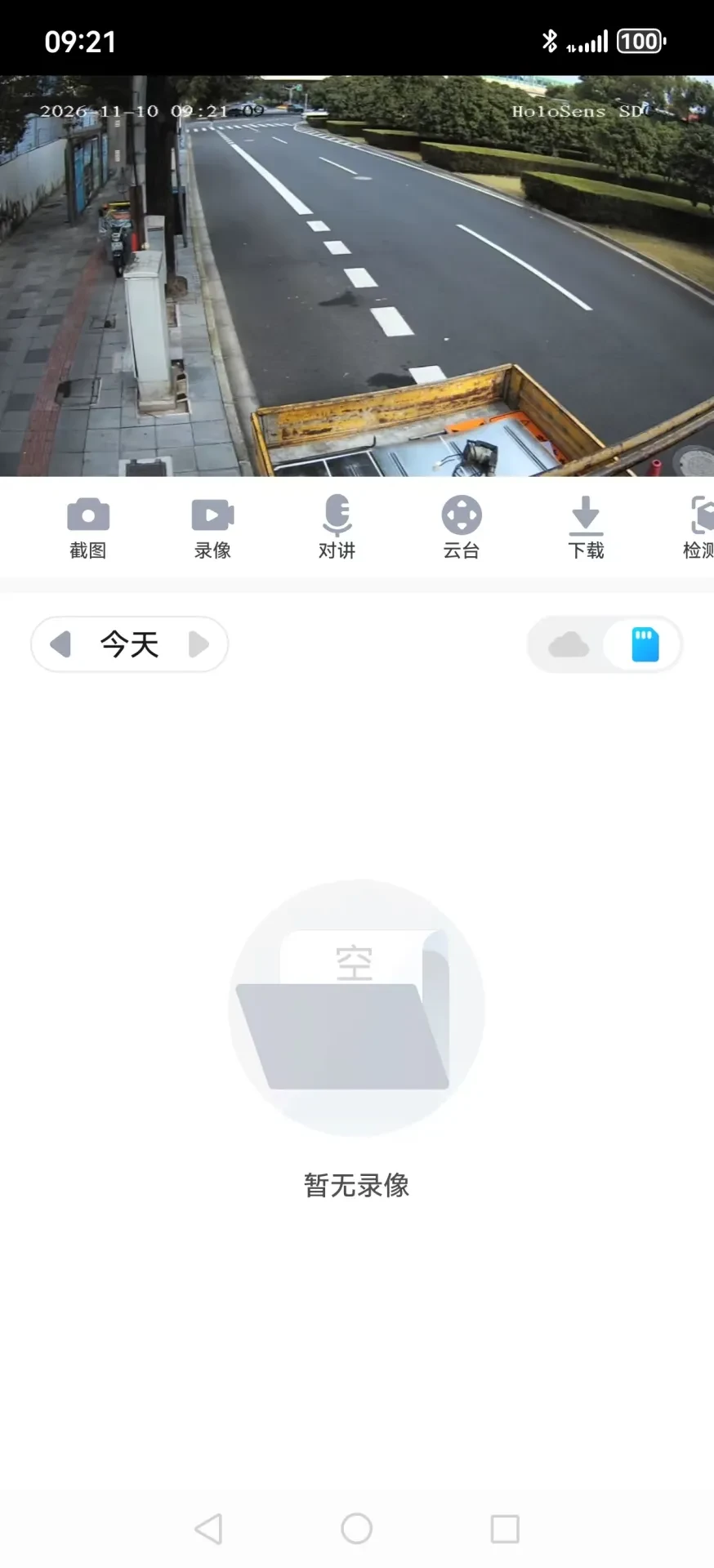
A cylindrical AI camera is mounted on existing poles using metal clamps and cantilever brackets, angled downward to cover the intersection lanes. The equipment cabinet and cabling are secured on the same pole. Detection and counting occur at the edge device, outputting timestamped structured traffic data rather than raw video requiring platform-side parsing.
Data Ingestion and Viewing
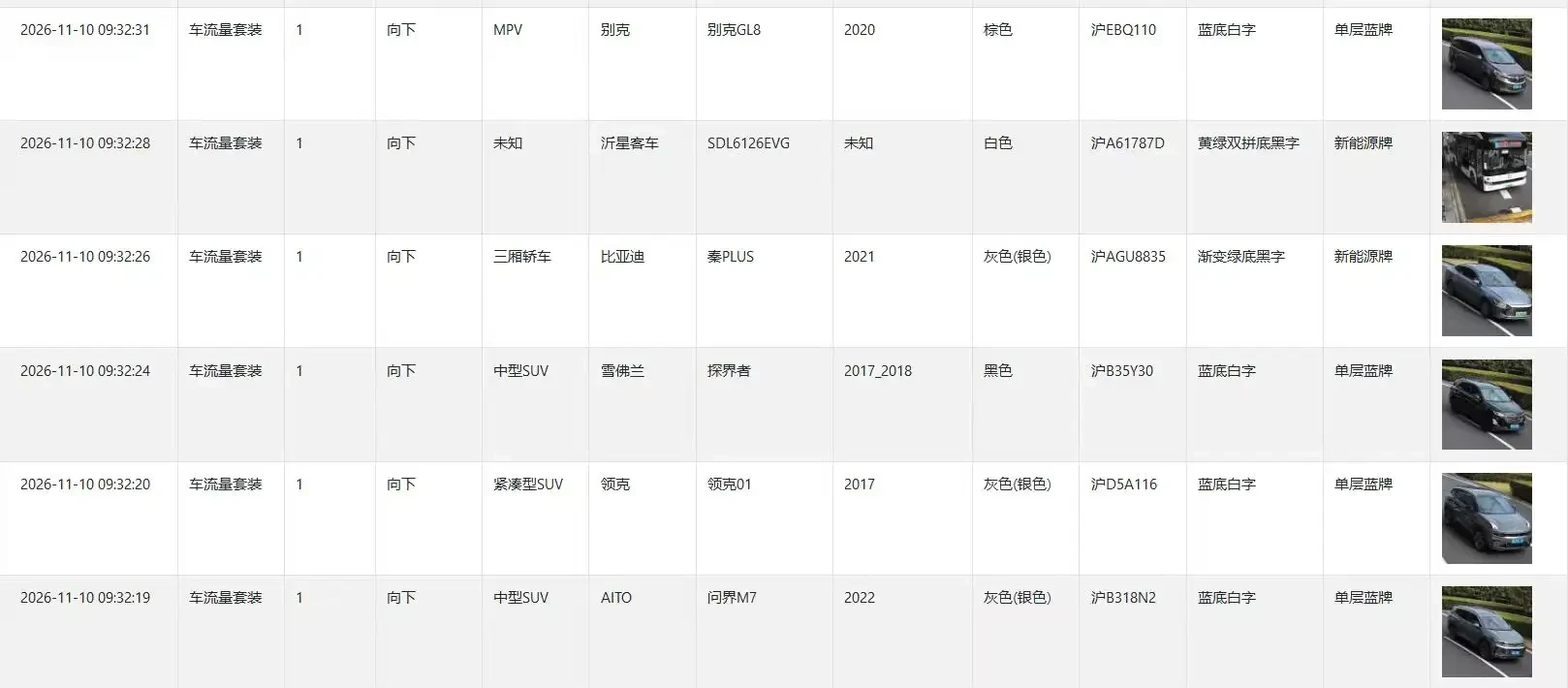
Devices connect to the public traffic cloud platform via HTTP API. The platform aggregates vehicle volume hourly and provides total, average, peak volumes, and trend curves. You can view data for today, yesterday, the last 7 days, or the last 30 days, or define a custom time range. No additional collection servers are required during measurement. The platform also retains per-vehicle passage logs, allowing you to review direction, vehicle type, and other characteristics by time.
Run Data
Measures the cumulative vehicle count of 8,880 at this location up to 17:34 today, with an hourly average of 1,269 and a peak period of 1,526. The 09:00 period recorded 860 vehicles. The trend curve fluctuates with morning and evening peaks, enabling direct assessment of traffic flow patterns on this road segment.
Project Value
- Leverage existing poles for deployment without constructing new structures or disrupting roadways; equipment can be removed and relocated immediately after measurement.
- Hourly traffic data makes peak and off-peak differences clear at a glance, replacing manual time-segment counting.
- Temporary sites share the same organizational account and platform reports; no need to re-purchase software when changing or expanding locations.


